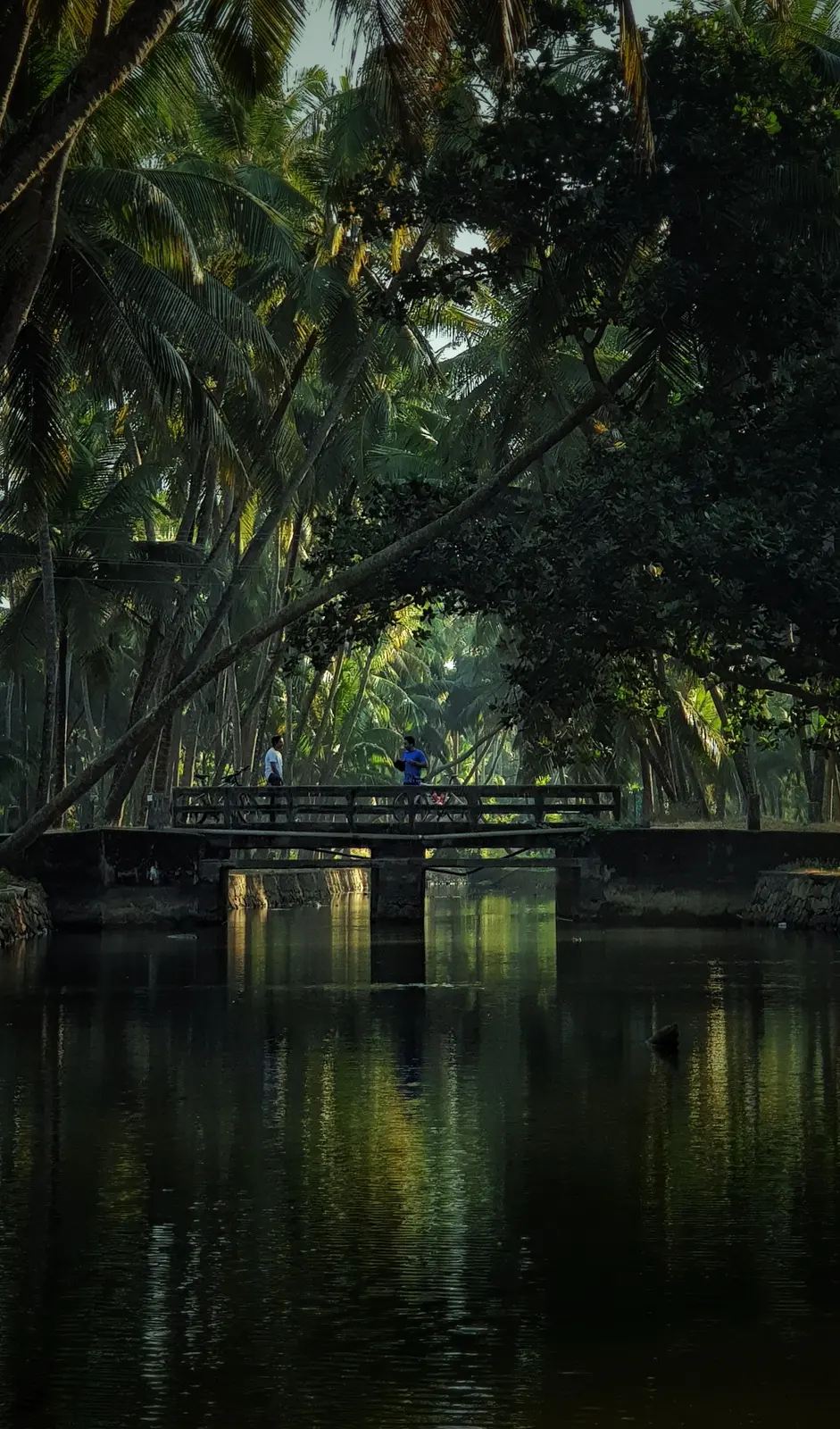
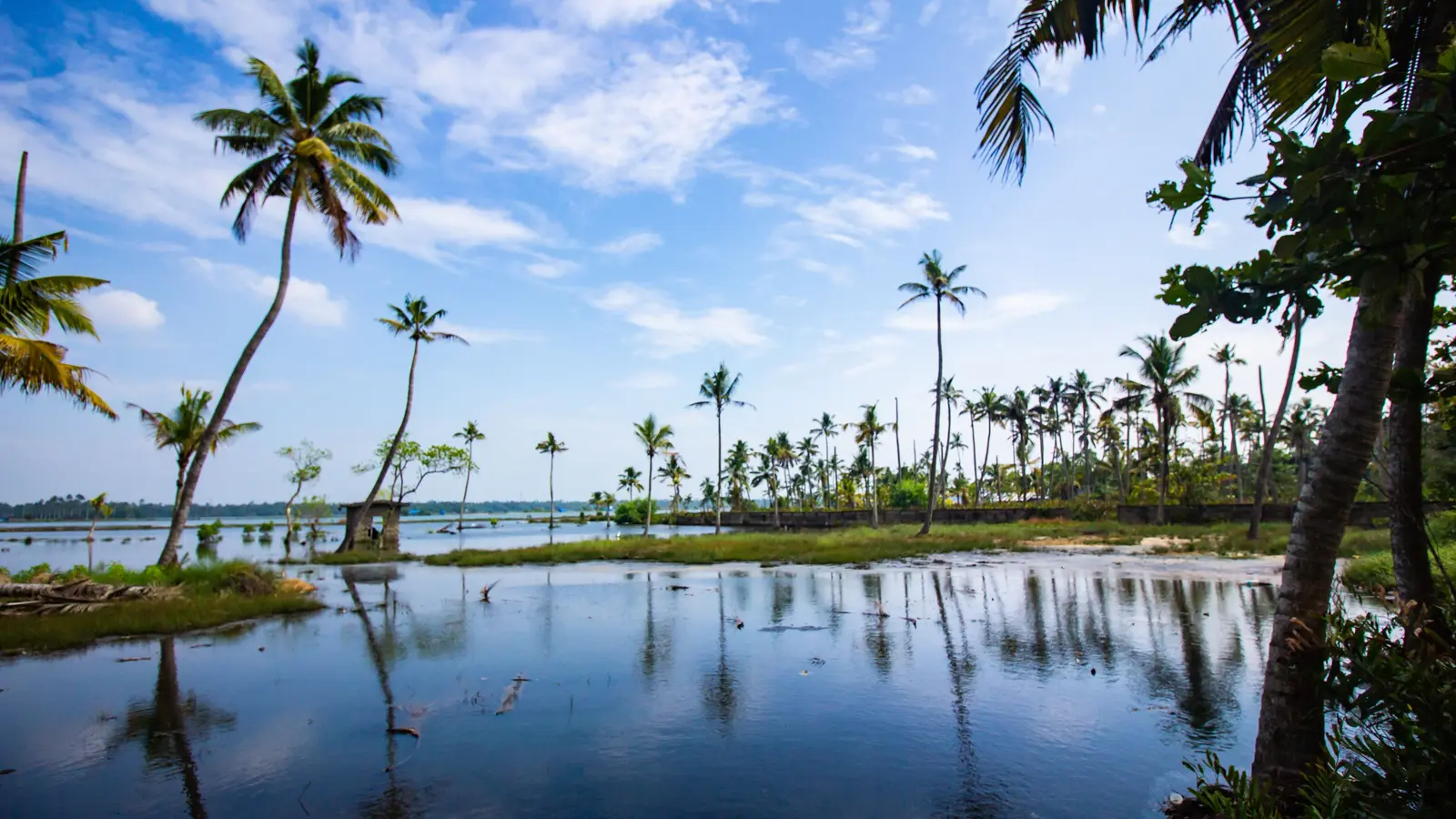
Coconut palms along a Kuttanad canal, Alappuzha
Alappuzha District · Kerala, India

The land where canals
outnumber roads

Between the Arabian Sea and the paddy fields of Kuttanad lies a district built on water — a 200-year-old port town, a rice bowl farmed below sea level, and villages that have raced snake boats for eight centuries.

Scroll
Photo: Kuttanad canal-side, Alappuzha
Where to begin

A district shaped by water, built by a diwan, and fed by the sea.

Alappuzha — Alleppey to the old maps — sits on a narrow strip between the Arabian Sea and Vembanad Lake, laced with more canals than roads. In the 1760s, the Travancore Diwan Raja Kesavadas planned it as a trading port, cutting canals through the marsh to move coir and spices to the coast. A century later, a British viceroy stood on its shore and called it "the Venice of the East" — a name that stuck.

Inland, the land drops below sea level into Kuttanad, Kerala's rice bowl, where farmers have grown paddy under the waterline for two centuries. Further south, around Mavelikara, the district turns quieter and older — temple towns on the Achankovil river with histories that predate the port by a thousand years.

01 — The Coast

Where the town meets the sea

The beach, the pier, and the port that gave Alappuzha its name on the world's trade maps.

Alappuzha Lighthouse
Photo: Alappuzha Lighthouse — Wikimedia Commons
Built 1862

Alappuzha Beach & Lighthouse

When Alappuzha's port opened to foreign traders in 1792, ships needed more than a lantern on the pier head to find it. The present lighthouse — a 28-metre red-and-white tower — was built during the reign of Marthanda Varma II and first lit in 1862, one of the earliest of its kind on Kerala's Arabian Sea coast.

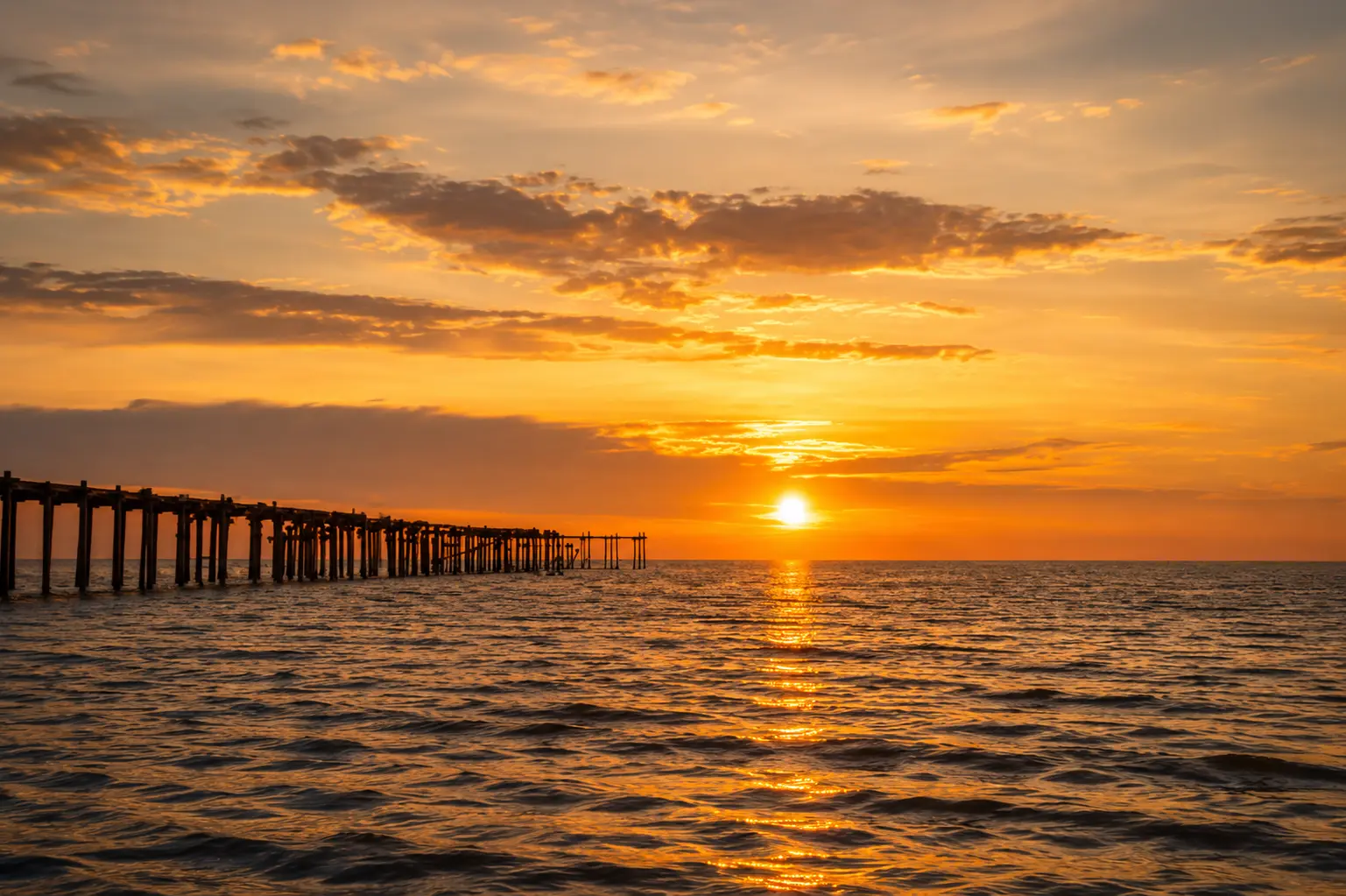
The old pier's timber remains still reach into the surf nearby, a physical trace of the working harbour that once loaded coir, spices, and cashew onto steamers bound for Europe. Swimming isn't allowed here — the currents are too strong — but the beach hosts Alappuzha's New Year beach festival and sand-art competitions every season.

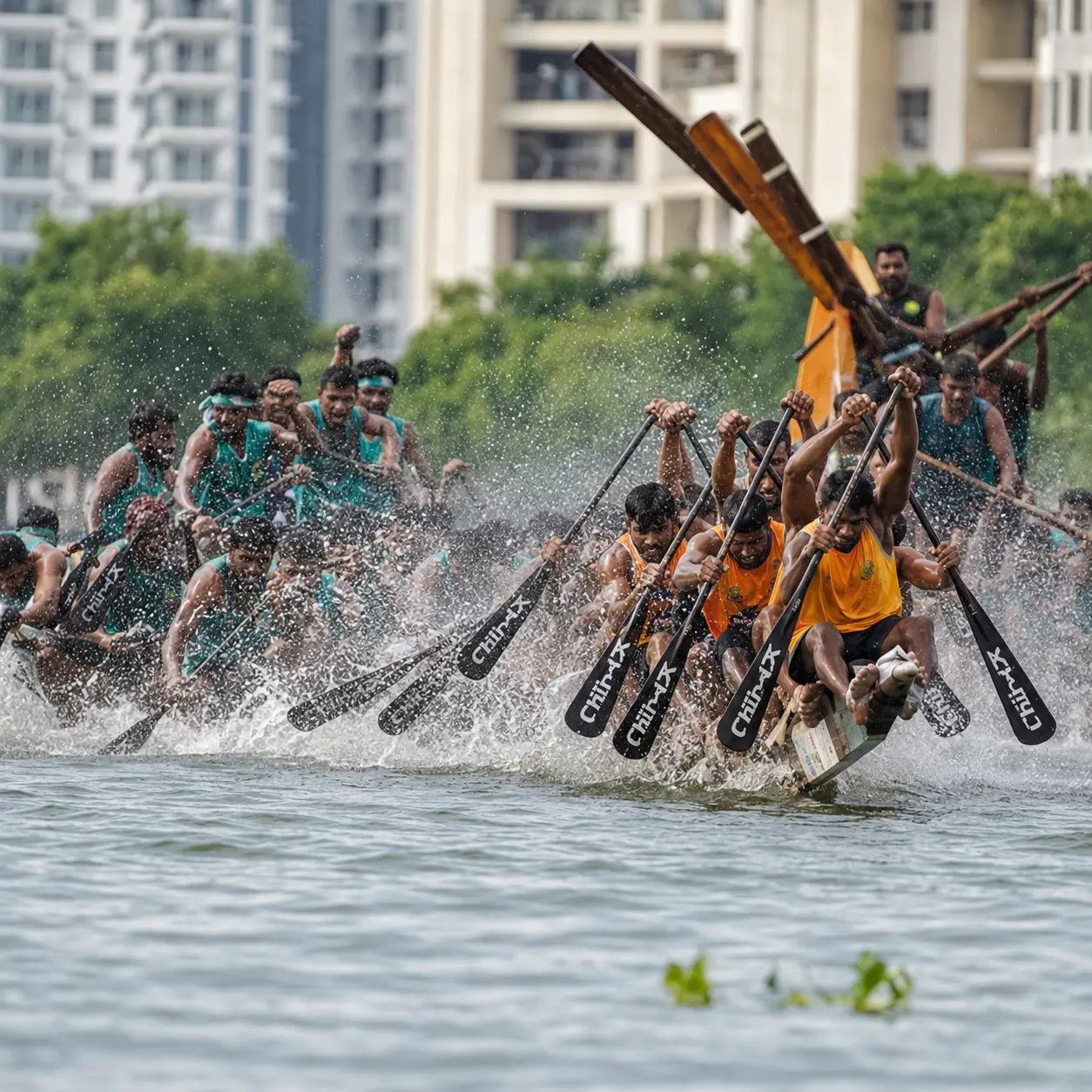
Snake boat crews racing on Punnamada Lake, Alappuzha
Punnamada Lake, race day
Second Saturday of August

Punnamada Lake & the Nehru Trophy Boat Race

In December 1952, Prime Minister Jawaharlal Nehru travelled by boat from Kottayam to Alappuzha through flooded Kuttanad, escorted by a procession of snake boats. An impromptu race was staged in his honour — and Nehru, delighted, broke protocol and climbed aboard the winning boat, the Nadubhagam Chundan, to ride it in himself.

He later sent a silver trophy shaped like a snake boat, inscribed in his own hand. That gift became the Nehru Trophy Boat Race, held every year since on Punnamada Lake — over 100-foot chundan vallams, each crewed by up to 128 oarsmen rowing to the rhythm of vanchipattu boat songs, watched by crowds of over 200,000.

"To the winners of the boat race which is a unique feature of community life in Travancore-Cochin." — Nehru's inscription on the original trophy
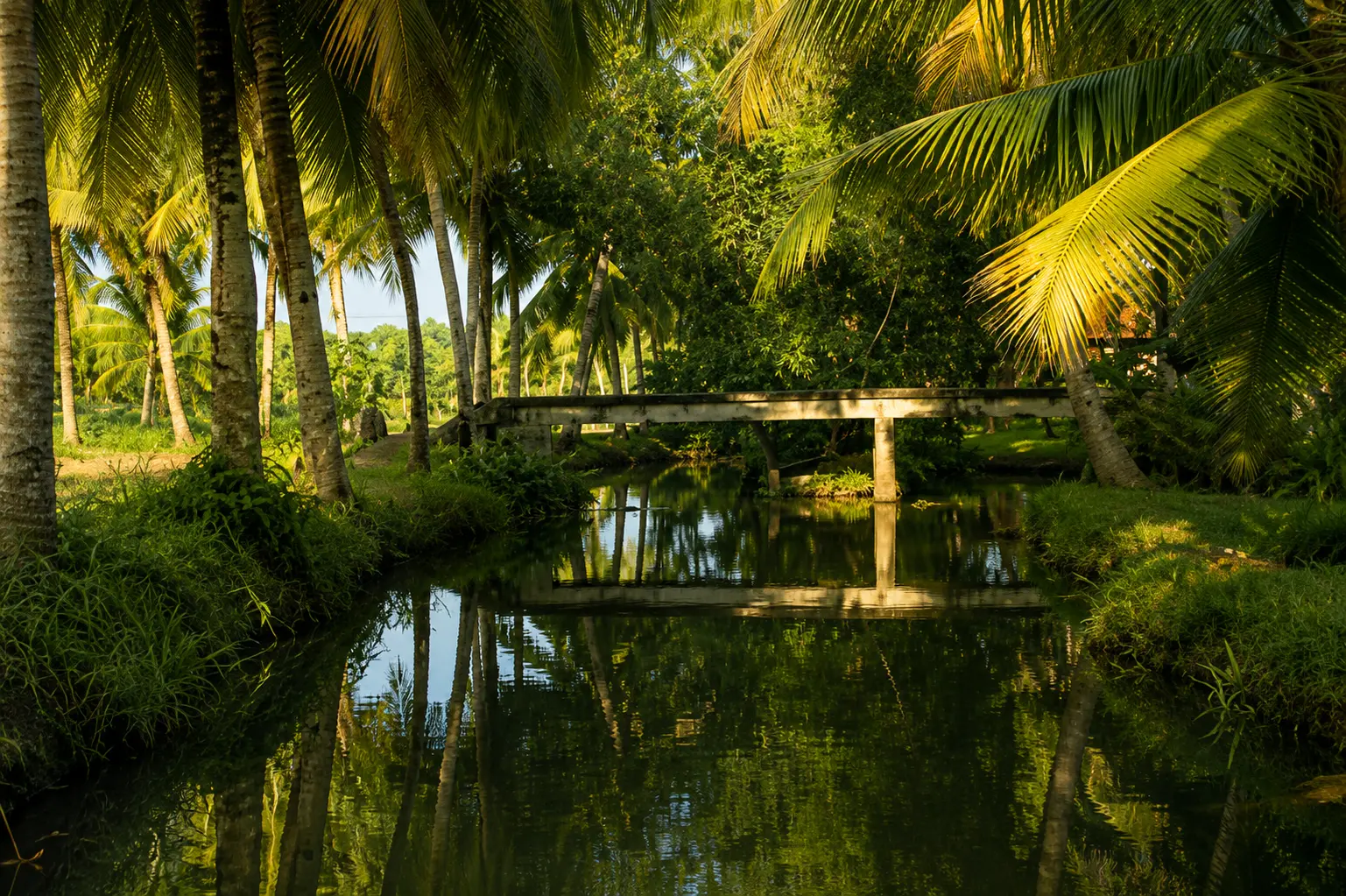
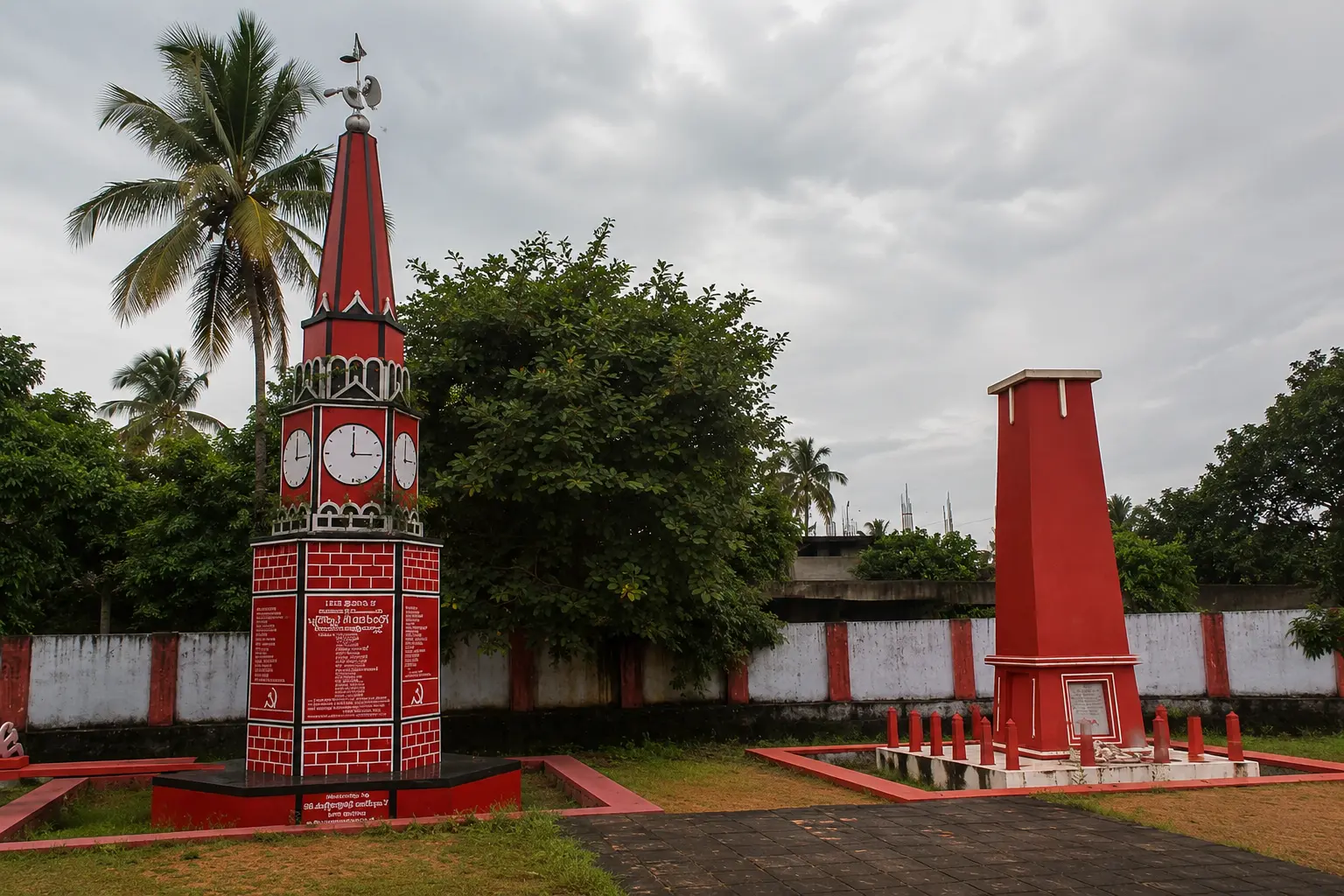
Punnapra-Vayalar martyrs' memorial, Alappuzha
Vayalar martyrs' memorial
October 1946

Punnapra & Vayalar — a revolt the port built

Alappuzha's coir factories, once the backbone of its port economy, employed thousands under brutal conditions for meagre wages. In October 1946, coir workers and peasants in the villages of Punnapra and Vayalar rose up against the autocratic rule of C.P. Ramaswami Iyer, the Diwan of Travancore — one of the most significant labour uprisings in Kerala's history, and later recognised as part of India's freedom struggle.

The revolt was crushed within days, but it broke the Diwan's grip on Travancore and helped seed the political movement that made Kerala the first place in the world to elect a Communist government, a decade later. A memorial at Vayalar honours those who died.

02 — Landmarks

Palaces, murals, and a payasam worth a pilgrimage

Krishnapuram Palace, Kayamkulam
Photo: Krishnapuram Palace, 2021 — Wikimedia Commons
Kayamkulam · 18th century

Krishnapuram Palace

After defeating the Kayamkulam Raja and absorbing the kingdom into Travancore, Marthanda Varma built this two-storey palace in the local Pathinarukettu style — gabled roofs, narrow corridors, dormer windows. It's said an underground passage still runs from the bottom of the palace pond, a possible escape route should the palace ever fall under siege.

Inside, the palace holds Gajendra Moksham — at roughly 150 square feet, the largest single-panel mural in Kerala, depicting an elephant king's salvation by Vishnu. It was placed deliberately at the pond-side entrance, so the Kayamkulam kings would see it each morning after ritual bathing.

Ambalappuzha Sree Krishna Temple
Photo: Ambalappuzha Sree Krishna Temple — Wikimedia Commons
15th–17th century

Ambalappuzha Sree Krishna Temple

Built by the rulers of Chembakassery, this is one of Travancore's seven great Vaishnavite temples — deity Parthasarathy, Krishna as Arjuna's charioteer, holding a whip in one hand and a conch in the other. Its walls carry murals of the Dashavatharam, Vishnu's ten incarnations.

Two things make it a place people return to: the Ambalappuzha Palpayasam, a sweet milk-and-rice offering made here since the temple's founding and still served daily; and its role as the birthplace of Ottamthullal, the satirical dance form first performed on these grounds by the poet Kunchan Nambiar.

03 — Kuttanad

Farming below the sea

The only place in the world where rice is grown two metres under sea level.

Kuttanad paddy fields, Kerala
Photo: Kuttanad, Kerala — Wikimedia Commons
The rice bowl of Kerala

Kuttanad's below-sea-level fields

Kuttanad is a 900 sq km delta of backwaters, rivers, and reclaimed paddy — locally called puncha vayals. For over 150 years, farmers here have built bunds to hold back the Arabian Sea and Vembanad Lake, then pumped the enclosed land dry to plant rice as much as two metres below sea level — a technique found nowhere else in India.

Glide through it by canoe or houseboat and you pass coconut groves, duck flotillas, and villages that farm land lower than the water surrounding them — a working landscape as much as a scenic one, and the source of the fish curries and toddy-shop meals the district is known for.

On the water

Gliding through the backwaters

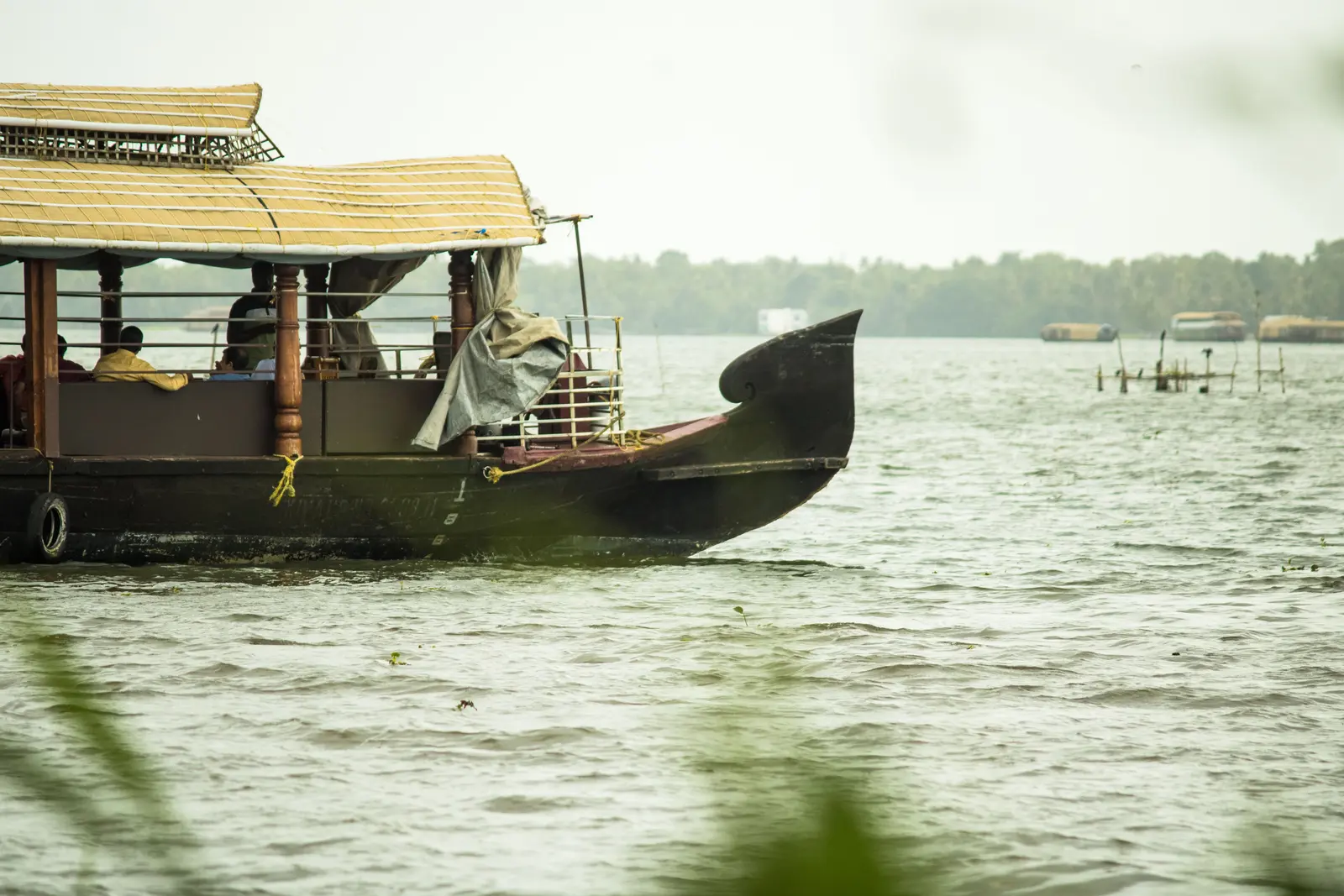
A houseboat easing along Vembanad Lake — the same slow, canal-level view that's drawn travellers to Kuttanad for over a century, just with a diesel engine now instead of a pole.

04 — Mavelikara & the Inland Taluks

South of the backwaters, older than the port

On the banks of the Achankovil river, Mavelikara was trading and worshipping centuries before Alappuzha town existed.

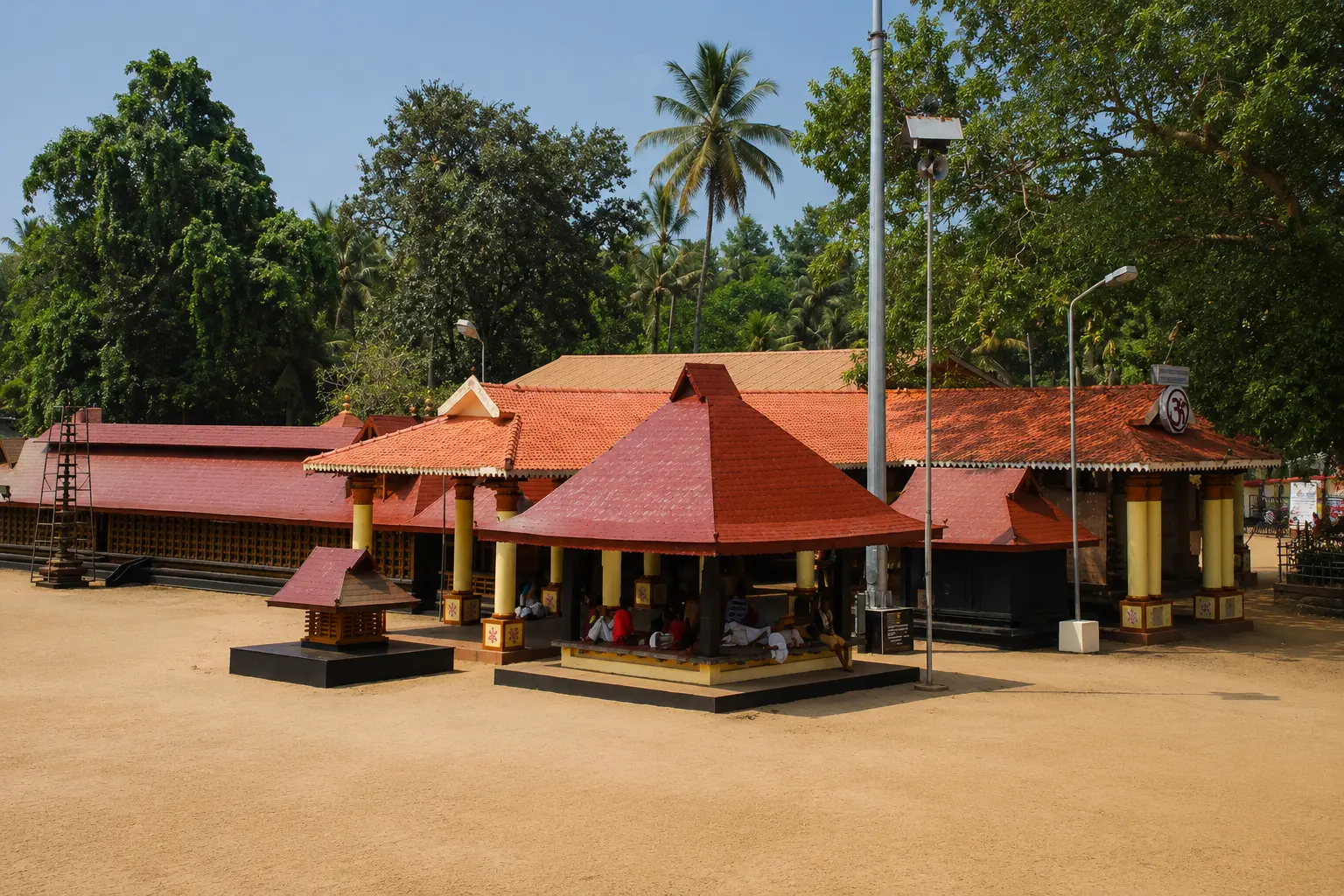
Chettikulangara Devi Temple, Mavelikara
Founded c. 823 CE

Chettikulangara Devi Temple

One of Kerala's largest Devi temples and, after Sabarimala, the second-largest under the Travancore Devaswom Board. Local tradition holds the goddess here — Bhadrakali, born from Shiva's third eye to defeat the demon Daruka — began as a family deity before growing into the region's guardian goddess across thirteen surrounding "karas" (territories).

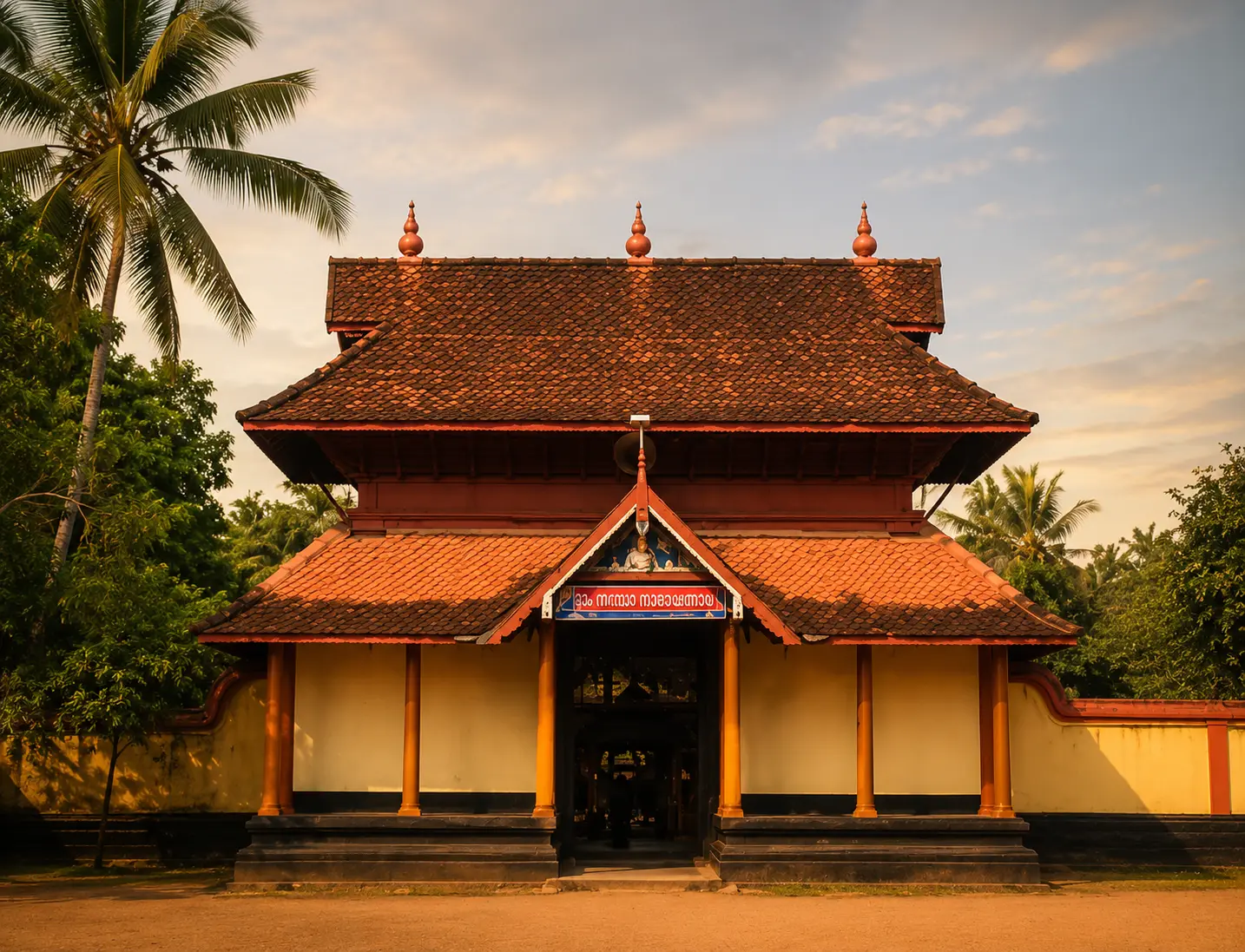
Kandiyoor Mahadeva Temple, Mavelikara
"Dakshina Kashi" — the Kashi of the South

Kandiyoor Mahadeva Temple

Tradition counts this among the 108 Shiva temples said to have been founded by Parashurama, and it's considered the oldest evidence of Mavelikara's history as a settlement. Set on the banks of the Achankovil river, it earned the name "Dakshina Kashi" for the sanctity attached to bathing in the river here.

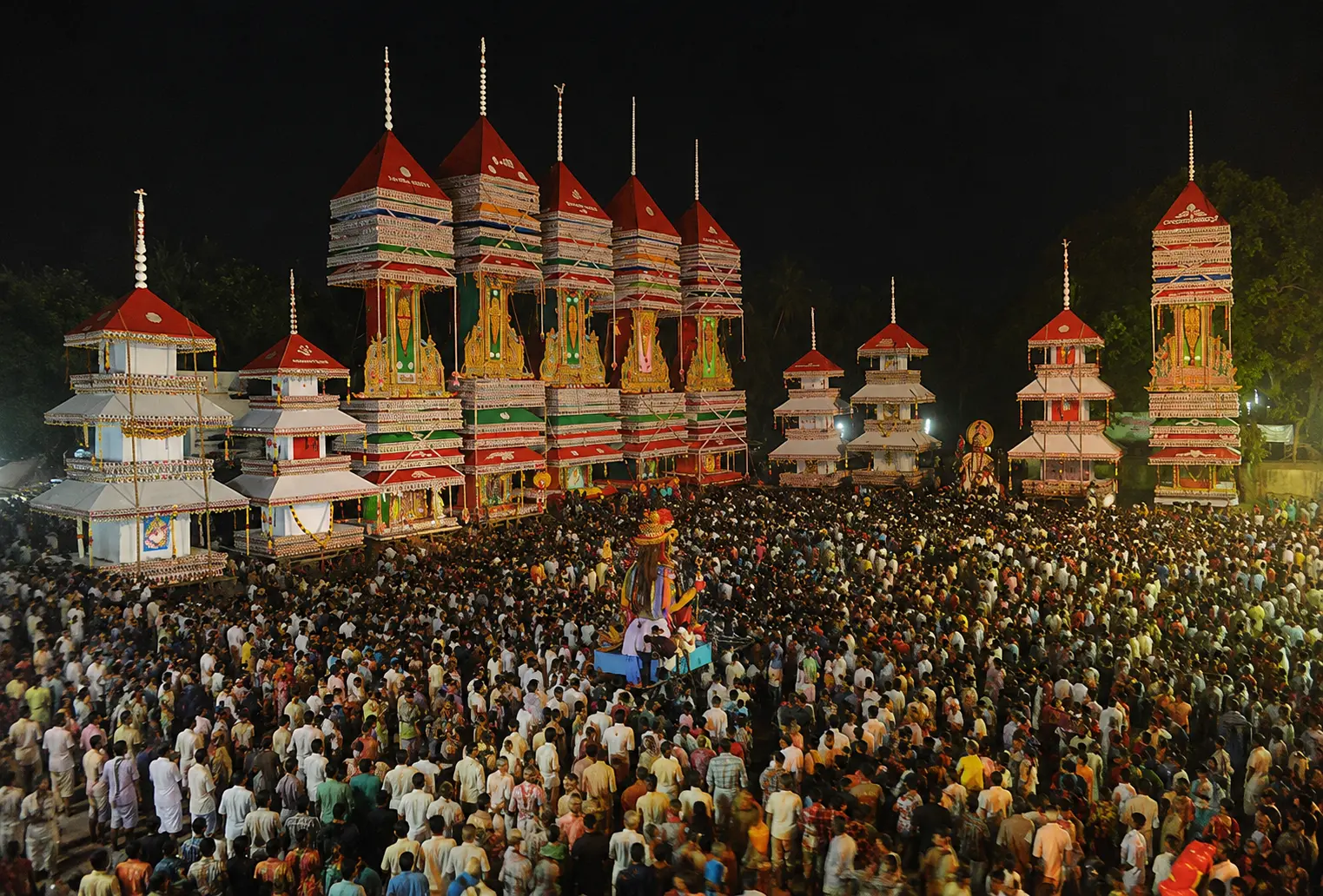
Kumbha Bharani festival, Chettikulangara Devi Temple, at night
Kumbha Bharani, Chettikulangara
Kumbha–Meenam, Feb–Mar

Kumbha Bharani — the towering Kettukazhcha

Once a year, thirteen surrounding villages each bring a Kettukazhcha — a soaring, temple-shaped effigy structure up to 12 metres tall, built new every year from bamboo, cloth, and paint — to Chettikulangara in a single overnight procession. Crowds that number in the hundreds of thousands gather before dawn to watch them arrive, lit against the dark, in one of central Kerala's largest temple festivals.

A quick timeline

Alappuzha, in five moments

823

Chettikulangara Devi Temple founded

Long before the port existed, Mavelikara was already a centre of trade and worship on the Achankovil river.

1762

Raja Kesavadas plans the port town

Canals are cut through the marsh to connect a new trading harbour to the coir- and spice-producing interior.

1862

The lighthouse is lit

Alappuzha's growing port trade gets its first permanent beacon on the Arabian Sea coast.

1946

Punnapra-Vayalar uprising

Coir workers and peasants revolt against the Diwan of Travancore — a defining moment in Kerala's labour history.

1952

Nehru rides the winning snake boat

An impromptu race for the visiting Prime Minister becomes the annual Nehru Trophy Boat Race.

05 — Cuisine

What the backwaters put on the plate

Coconut, rice, and whatever the lake gave up that morning.

Karimeen, Kerala's pearl spot fish
Wikimedia Commons

Karimeen Pollichathu

Pearl spot fish, marinated and grilled in banana leaf — declared Kerala's state fish in 2010, and the signature dish of every houseboat kitchen.

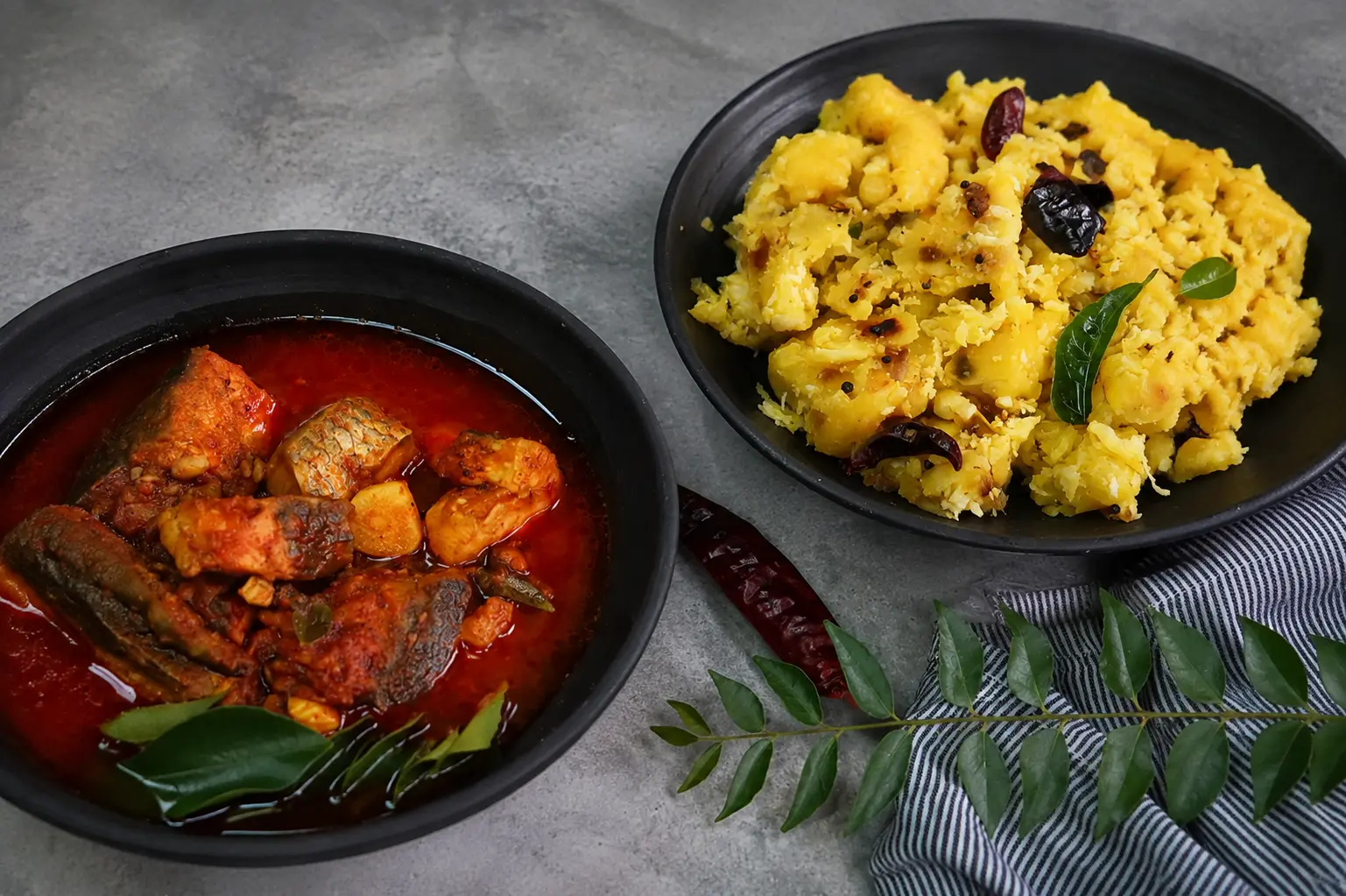
Kappa and meen curry, tapioca with fish curry

Kappa & Meen Curry

Boiled tapioca with a fiery fish curry — the everyday staple of Kuttanad's canal-side kitchens.

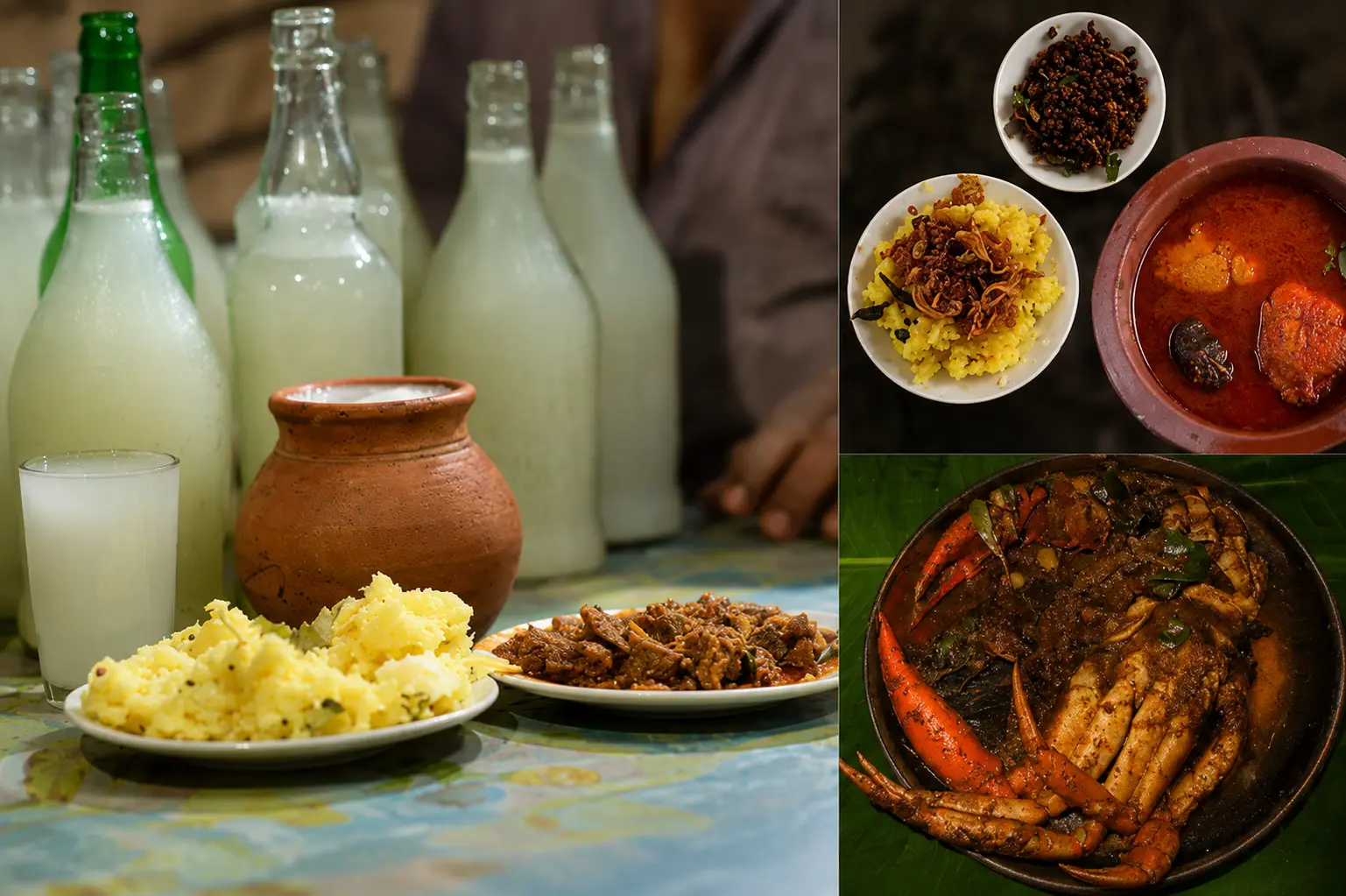
Toddy shop spread — kallu, kappa, duck and crab roast

Kallu Shappu

Fresh toddy alongside duck roast, spicy crab, and kappa — the classic toddy-shop table.

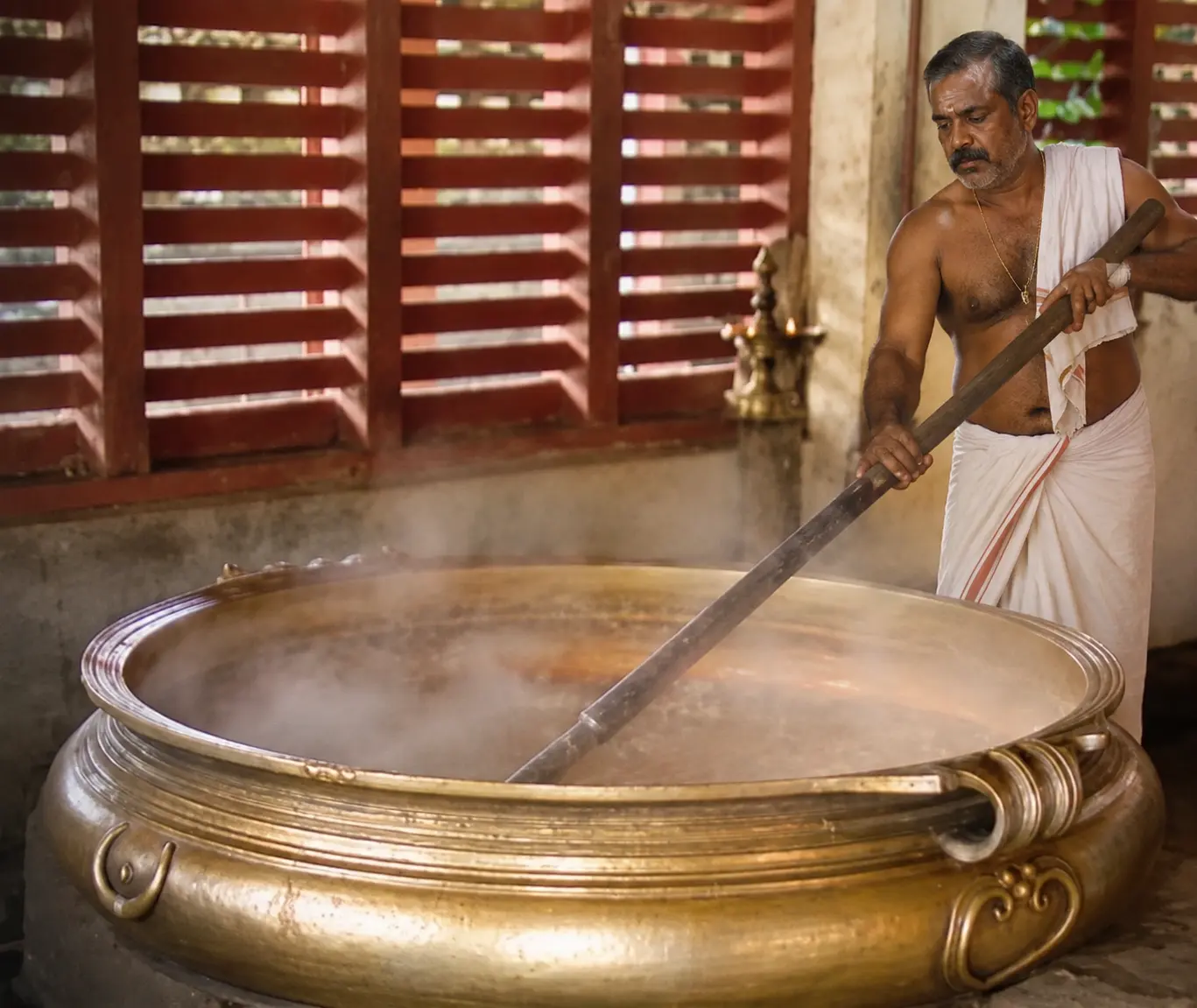
Palpayasam being stirred in the temple's giant urn at Ambalappuzha

Ambalappuzha Palpayasam

Milk and rice, slow-stirred in a giant urn at the temple — offered daily since the 1600s.